
Articles / Security / Product / Community
Emergency Procedures: What Your Estate Should Have
When something goes wrong; a fire, a medical scare, a flood at midnight, the minutes before help arrives are the ones that matter. Here’s what a well-prepared estate has in place so those minutes are never wasted.
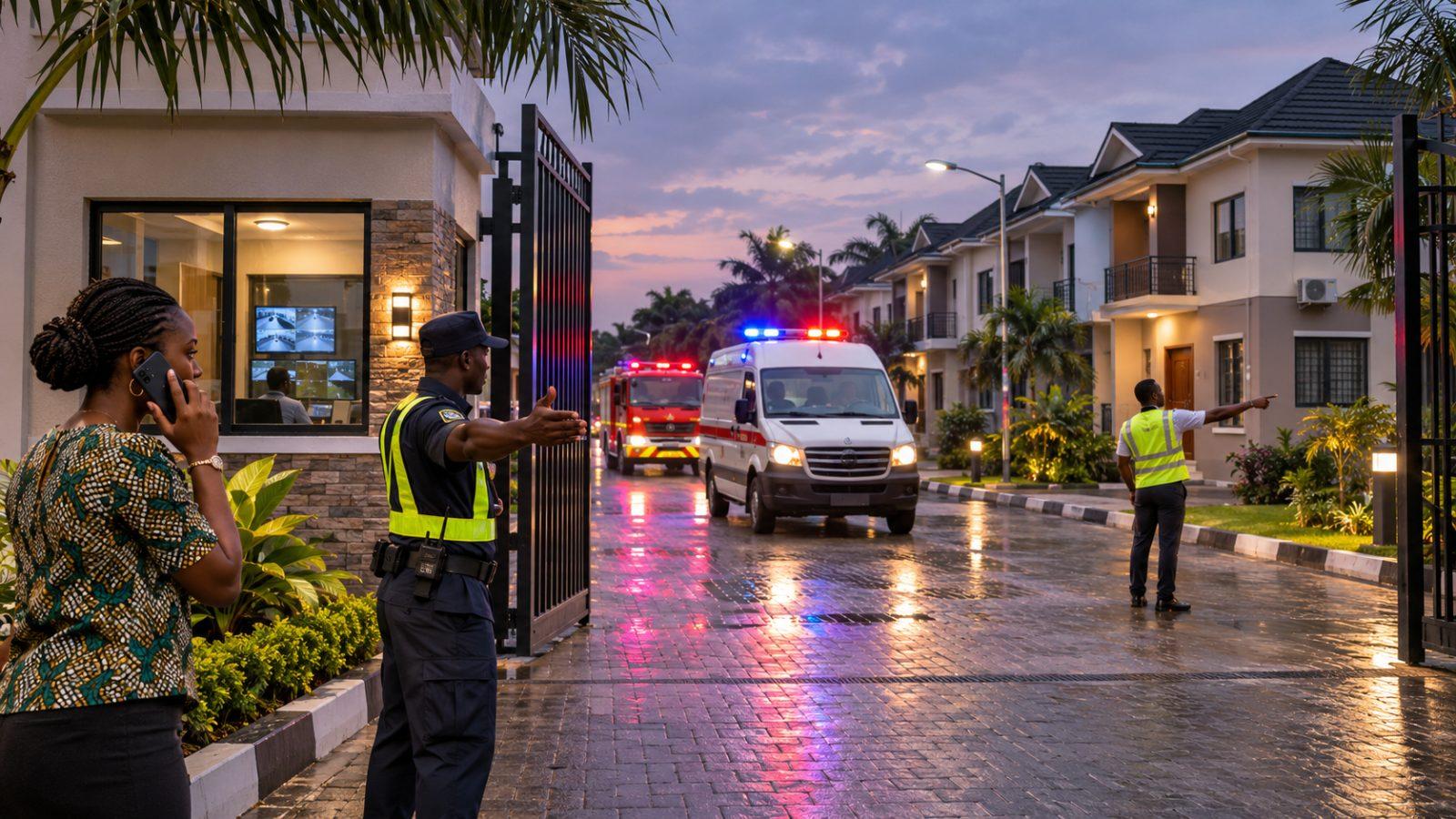
Emergencies in an estate take many shapes. A child struggling to breathe at 2am. A kitchen fire. A generator that explodes. Floodwater rising through the night. An elderly neighbour who has collapsed and can’t reach anyone. What they share is simple: the first few minutes matter most, and in most estates those minutes are lost to confusion; who to call, who to tell, who is actually in charge.
Most estates have never agreed a plan for any of it. Security gets treated as a gate and a guard, and everything beyond that is improvised in the moment. Sometimes the estate’s own surroundings make it worse: in Festac, residents have watched failing drainage and flooded roads cut off whole streets, turning a bad night into a stranded one. When no one knows the plan or there isn’t one, help is slow even when it’s close.
The good news: preparing for this isn’t expensive or complicated. It’s mostly about agreeing a few simple things before you ever need them. Here’s the checklist every estate should be able to tick.
1. One fast way to raise the alarm.
In a real emergency, nobody should be scrolling for the right number. Every resident should have a single, obvious way to call for help that reaches estate security instantly; with their name and house already attached, so the guard knows who and where without asking. A good estate app puts this one tap away: an alert that reaches security, relevant executives and neighboring residents when necessary. No shouting across the compound, no guessing which house.
2. A way to reach everyone at the same time.
Some emergencies affect the whole estate; a gas leak, a flood, a security threat, an evacuation. You need to reach every resident in seconds, not pass word gate to gate. A broadcast that lands on every phone at once turns a rumour into a clear instruction.
3. A gate that works under pressure.
Your guards are your first responders. They should know the emergency protocol cold: when to open fully, who to call, how to guide a fire truck or ambulance straight to the right house. And the system they rely on should keep working when the network or power drops, because emergencies rarely wait for good signal. An estate whose gate still runs the moment the internet goes down is one that doesn’t freeze when it matters most.
4. The right numbers, in one place, kept current.
LASEMA, the state fire service, the nearest hospital, your estate security lead. Every resident should find them in seconds, inside the app they already use, not on a faded notice nobody reads.
5. A record of what happened.
After the dust settles, a well-run estate asks: what worked, what didn’t, what do we fix before next time? An incident log, every alert and response, timestamped, turns a frightening night into a lesson that makes the estate safer.
6. Clear roles for the first ten minutes.
Who opens the gate? Who meets the responders? Who checks on elderly or vulnerable residents? Decide it now, write it down, make sure the exco and guards know their part. The plan you make on a calm afternoon is the plan that saves time on the worst night.
None of this needs a dramatic overhaul. It needs a few agreements, written down, and the tools to act on them in residents’ hands. That’s what preparation really is — not fear, but quiet confidence that if the worst happens, your estate already knows what to do.
A safe community isn’t one where nothing ever goes wrong. It’s one that’s ready when it does.

Laura
Home Access Technology Ltd · 17 November 2026